Need a Quote? Call us now: 07502438185

Gutter Leaf Protection Stop Costly Blockages Fast
How Gutter Leaf Protection Stops Costly Blockages Before They Start
Gutters usually fail quietly: a little leaf buildup, a slow drain, then one heavy storm later you've got overflow pouring over the edge, soaking fascia boards, staining siding, and dumping water right where you don't want it-next to your foundation. The goal of gutter leaf protection isn't to make your system maintenance-free. It's to stop clogs early enough that you avoid the expensive damage that comes from chronic overflow and backed-up downpipes.
In this guide, we'll break down how gutter protection works, which gutter guard styles prevent blockages best for your debris type, and how to keep water moving through both the trough and the downspout.
The real reason blockages get expensive: overflow always finds the weakest spot
A blockage rarely causes just one problem. When water can't exit fast enough, it spills over the front edge, runs behind the gutter, or backs up under shingles. Over time, that can lead to:
Fascia and soffit rot from constant wetting behind the gutter line.
Basement leaks and foundation stress as overflow concentrates water along the perimeter.
Landscape erosion from concentrated waterfall discharge.
Downpipe failures when debris compacts into a plug and water has nowhere to go.
That's why the best systems focus on preventing buildup at the top and protecting the outlet points that clog first.
What before they start means in practice
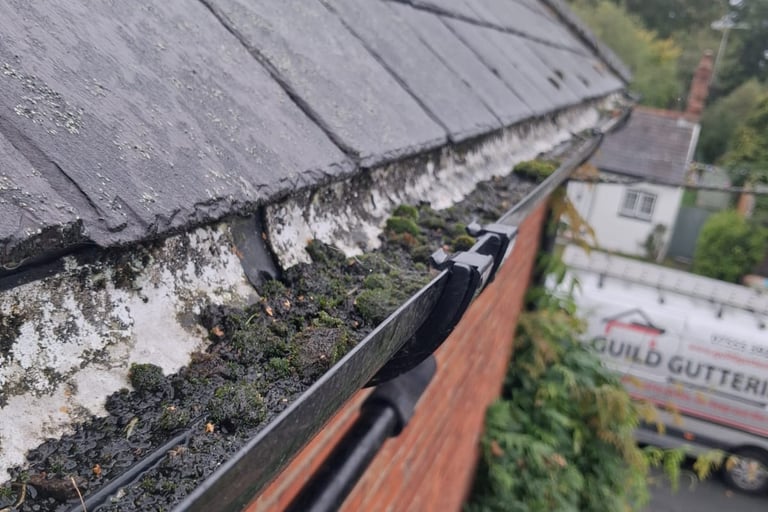
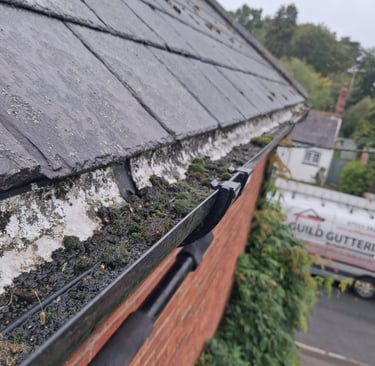
Clogs don't start as a full gutter of leaves. They start as small catch points: a shingle granule layer that holds moisture, a few twigs that snag more debris, or a downspout elbow that traps a wad of soggy leaf pulp. Effective gutter covers and guards prevent those first snag points by doing two things:
Separating water from debris so leaves and needles don't enter the trough.
Keeping outlets open so even fine debris can't form a plug where the gutter drops into the downspout.
When you get this right, gutter guards for leaves reduce the frequency and severity of cleanouts, and they dramatically lower the odds of sudden overflow during a storm.
How debris actually clogs gutters (and why some guards fail)
Different debris creates different failure modes, which is why one homeowner raves about a product while another calls it useless. The most common clog culprits are:
Big leaves (maple, plane, sycamore): they mat together and form a dam.
Pine needles: they slide through wide openings and knit into a dense, rope-like blockage.
Seed pods and blossoms: they pack into corners and outlets.
Roof grit (shingle granules): it settles like sand and can slowly reduce capacity.
So the right leaf guard depends less on brand and more on what's falling on your roofline.
Mesh and micro-mesh: the most versatile blockages-prevention option
A quality mesh guard for gutters is designed to block most debris while letting water in quickly. Micro-mesh designs are especially useful when you deal with pine needles, shingle grit, or fine seed helicopters. When people say rain gutter guards actually worked, they're often talking about a well-fitted mesh system with solid perimeter support.
Look for tight, rigid mesh that resists warping and maintains a consistent gap between roof edge and guard. Installed correctly, this approach functions like a dependable rain gutter filter at the top of the system: water passes through, debris stays out.
If you're using Canadian terminology, the same products are commonly sold as eavestrough gutter guards, and the concept is identical: screen out debris, preserve flow.
Surface-tension covers: great for leaves, weaker for needles
Reverse-curve designs-often marketed simply as covers for rain gutters-use surface tension to wrap water into the gutter while shedding leaves. They can be effective gutter protectors in areas with large leaves and consistent rainfall.
However, tiny debris can be the deal-breaker. Pine needles, grit, and shingle dust may follow the curve or accumulate at the lip, which can reduce intake over time. If you need a true gutter leaf guard for fine debris, mesh typically performs better.
Budget options: when plastic screens, foam, and netting make sense
Not every house needs a premium system. For light seasonal leaf drop and easy first-floor access, lower-cost options can still reduce risk:
Plastic or aluminum screens: basic blockage reduction, but performance depends on hole size and fit.
Foam inserts: act like gutter filters, but can clog internally with grit over time.
Gutter netting: can stop larger leaves, but may need frequent clearing where fine debris is common.
These can help, but the narrative to remember is the title of this post: stopping blockages before they start requires preventing the small catch points-and budget systems often struggle with fine debris and outlet clogs.
Don't forget the downspout: where many clogs actually begin
Even with strong top-side protection, outlets are still critical. A small amount of grit or leaf fragments can collect at the drop, then form a plug in the elbow. That's why downspout protection is a smart add-on in problem areas:
Gutter downpipe guards help keep larger debris from entering the drop.
Gutter downpipe leaf guard designs focus specifically on preventing leaf mats at the outlet.
Paired with a mesh system, this is where a fine debris setup becomes a true rain gutter leaf guard solution instead of just a leaf screen.
Choosing the right system for your home (and your region)
Use these quick matches to pick the most effective protection:
Mostly big leaves: surface-tension gutter covers or sturdy screen guards can work well.
Pine needles + grit: micro-mesh + solid fitting is usually the best-performing leaf guard gutter guards category.
Mixed debris: prioritize a rigid mesh system with easy seasonal rinse-down.
If you're researching gutter guards uk options, pay extra attention to moss, frequent light rain, and older rooflines. In those conditions, reliable eavestrough protection (or standard gutter protection) often comes down to correct installation and keeping water intake consistent through long wet seasons
Installation: DIY vs professional (and what matters either way)
You'll see gutters gutter guards marketed as universal, but performance depends heavily on fit. Guards must sit securely, maintain a clean water path into the trough, and avoid gaps at corners and end caps. Professional installation can be worthwhile if you have:
Two-story rooflines or steep pitches
Complex valleys that dump heavy debris in one spot
Old or uneven fascia where alignment is tricky
DIY can work well on single-story homes if you're comfortable on ladders and you can fasten the system properly without bending the guard or lifting shingles incorrectly.
Maintenance: what you still need to do (and how little it can be)
The best systems still benefit from light checkups. A quick seasonal routine usually prevents the slow buildup that causes surprise overflows:
Brush or blow off the top surface after heavy leaf drop.
Rinse mesh with a hose to clear fine grit (especially after roofing work).
Confirm outlets are open and that gutter downpipe guards aren't holding a debris mat.
If you want the simplest upkeep path, treat your system like layered filtration: a top-side guard plus targeted outlet protection. That combination is what turns a basic leafguard for gutters into consistent, storm-ready performance.
Wrap-up: a smarter way to stop clogs before they start
Costly gutter problems usually aren't caused by one dramatic clog-they're caused by repeated small blockages that force water where it doesn't belong. The right eavestrough guard or gutter system keeps debris out, keeps outlets open, and keeps water moving away from your home.
If you're choosing your next upgrade, start with your debris type (leaves vs needles vs grit), then select either a rigid mesh solution or a cover style that matches your roof and rainfall. Done right, eavestrough leaf guard solutions and modern gutter guards reduce ladder time and stop the damage cycle before it begins.
Davis Property Services
Unit 7 Midleton Trading Estate
Guildford
GU2 8FT
Davis Property Services GU Limited
Company Registration: 11391591
VAT Registered: 312085441
Public Liability Insurance £5 million
Heatworks Certificated.
© 2026. All rights reserved.
Working Hours
Monday - Friday
7:30am - 4:30pm
Saturday
7:30am - 12:00pm


Website created and hosted by SPP Web Design and Hosting
Serving Our Local Community: Based in Guildford, Davis Property Services GU Limited (DPSGU) provides expert guttering and maintenance services across Ash Vale, Godalming, Woking, Farnham, and the surrounding Surrey areas.